Filtered Town Water
Two Greensand Plants Remove Iron And Manganese
The Water Division runs five wells and two greensand filtration plants. Treated town water is less likely to stain grout, though cleaning and sealing still matter in a shower.

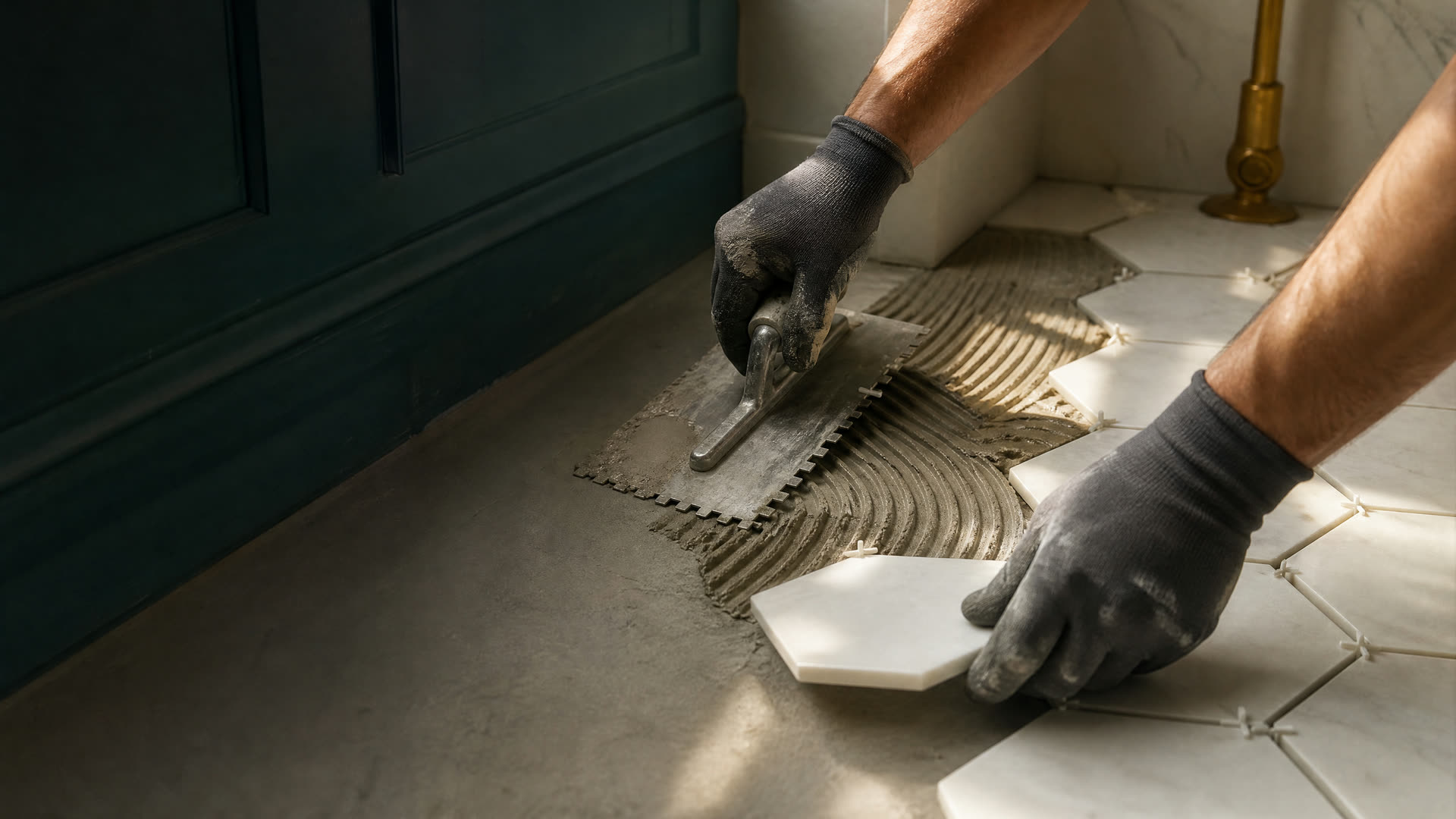
East Bridgewater · Tile And Waterproofing
Retiling a shower, floor, or full bath in East Bridgewater? Learn how town water, private wells, and damp ground-floor rooms affect tile and grout choices, then reach an independent remodeler.
East Bridgewater, Massachusetts
Where your water comes from changes how East Bridgewater tile ages. Homes on town water get supply from five municipal wells that pass through two greensand filtration plants, which remove iron and manganese before the water reaches the tap. About 215 residences, by the Master Plan's count, draw from private wells instead, and that water only gets whatever treatment the owner has installed. Orange or dark staining on grout is one of the first places untreated iron and manganese show up.
That's worth knowing before choosing a pure white grout. It's also a reason to look closely at what goes behind the tile: the membrane, pan, or backer board that keeps water out of the walls and floor. A ground-floor or basement bathroom adds another layer of concern in a town where heavy rain floods streets and fields.
South Shore Bathroom Remodeling Finder doesn't set tile or sell materials. We help East Bridgewater homeowners reach independent remodelers and tile installers who serve the town, and you decide whom to hire.
Colored staining that returns after cleaning can come from iron or manganese in the water, or from mildew in grout that stays wet. Each has a different fix.
A hollow sound can mean the tile has lost its bond. In a shower, that often means water has reached the backing.
A crack that crosses tiles and grout lines may point to movement in the subfloor or framing, which needs to be fixed before new tile.
Corners and the joint at the tub or pan should flex. If caulk keeps splitting, ask a remodeler to check for movement or hidden water.
Local knowledge
Water supply and local flooding both shape tile, grout, and waterproofing choices.
Filtered Town Water
The Water Division runs five wells and two greensand filtration plants. Treated town water is less likely to stain grout, though cleaning and sealing still matter in a shower.
Private Wells
The Master Plan counts about 215 residences on private wells. If yours is one, a water test before retiling helps you choose grout color and decide whether treatment should come first.
Storm Flooding
The Master Plan says large rain events cause major flooding across town, and the upper Satucket River can flow backward in heavy runoff. For a basement or ground-floor bath, choose tile and setting materials that tolerate water and dry out well.
Right now
A little preparation helps you pick materials and get accurate bids.
Check whether you're on town water or a private well. If you're on a well, consider testing it before choosing grout and fixtures.
Take pictures of loose tiles, stains, and cracks, and note when they appeared. They help a remodeler judge what's behind the surface.
If water is showing up below the bathroom, pause showering there until the source is found, so damage doesn't spread.
If water has reached an outlet, light, or fan, don't touch it. Have an electrician check it before tile work starts.
What to expect
A remodeler or tile installer will check the substrate first: whether the subfloor is stiff enough for tile, whether walls are flat, and what waterproofing is behind the shower now. In an older house, they may recommend removing old tile and backing rather than tiling over it.
Tile alone usually doesn't need a plumbing permit, but replacing a shower pan, valve, or drain does, and the plumbing and gas inspector in the Building Department handles that. Moving or adding lights or outlets goes through the electrical inspector. Applications are filed through the department's online system, and the contractor should confirm the permit list.
Expect a flood test of any new shower pan before tile goes on, and ask how long mortar, grout, and sealer need to cure before the shower is used.
Hire smart
In Massachusetts, contractors who remodel an existing owner-occupied home of one to four units must be registered Home Improvement Contractors, and the plumbing and electrical parts of the job must be done by a plumber and an electrician who hold Massachusetts licenses, under permits.
Remodeling contractors working in owner-occupied homes must be registered Home Improvement Contractors. Search the state's contractor database.
Ask which membrane or pan system they use, how they seal seams and the drain, and whether they flood-test before tiling.
If you're on a private well, ask what grout type and color they recommend, and whether they suggest sealing it.
List tile type, layout, trim pieces, waterproofing, and prep work in writing, with start and completion dates.
Costs
Prep work often matters more than the tile itself. Removing old tile, replacing damaged backing or subfloor, flattening walls, and installing a new membrane all take time. Small mosaic tiles, complex patterns, and niches add labor, while large tiles may need extra floor prep.
Ask each installer for an itemized written estimate that separates demolition, prep, waterproofing, tile, grout, and trim, with an allowance for hidden damage. Make sure bids describe the same waterproofing system before comparing them.
More help in East Bridgewater
Every page below is written for East Bridgewater homes. Or start from the East Bridgewater bathroom remodeling guide.
Learning Center

Massachusetts gives homeowners real protections on remodeling jobs, but only if the contractor is registered and the contract follows the law. Here is what to check before you hand over a deposit.
Read the guide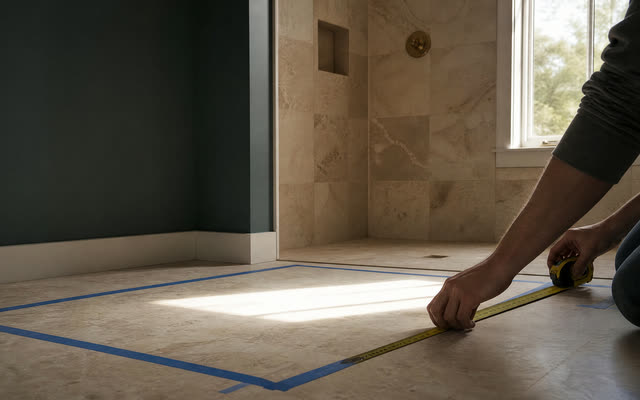
The decisions you make before demolition shape the cost, the schedule, and how the room works for the next twenty years. Here's what to settle first.
Read the guideQuestions
Still not sure? Send a short request and a local pro can answer the specifics.
It can be iron or manganese in the water, mildew, or soap residue. Town water is filtered for iron and manganese; private well water may not be, so a water test can help.
Sometimes, if the old tile is firmly stuck down and the floor is stiff enough. In a shower, most installers prefer to remove it and check the waterproofing.
Porcelain tile set with water-tolerant materials is a common choice where dampness is a concern. Ask the installer about moisture testing and drainage first.
Tile alone may not, but replacing a shower pan, valve, or drain needs a plumbing permit from the Building Department's inspector. Ask the contractor to confirm.
Get connected
Share a few details and an independent local bathroom remodeler who serves your town can follow up about the job. There’s no charge to use this site, and you decide whether to hire anyone.
Prefer to talk? Calling is the fastest way to reach a local bathroom remodeler.
Call Now