
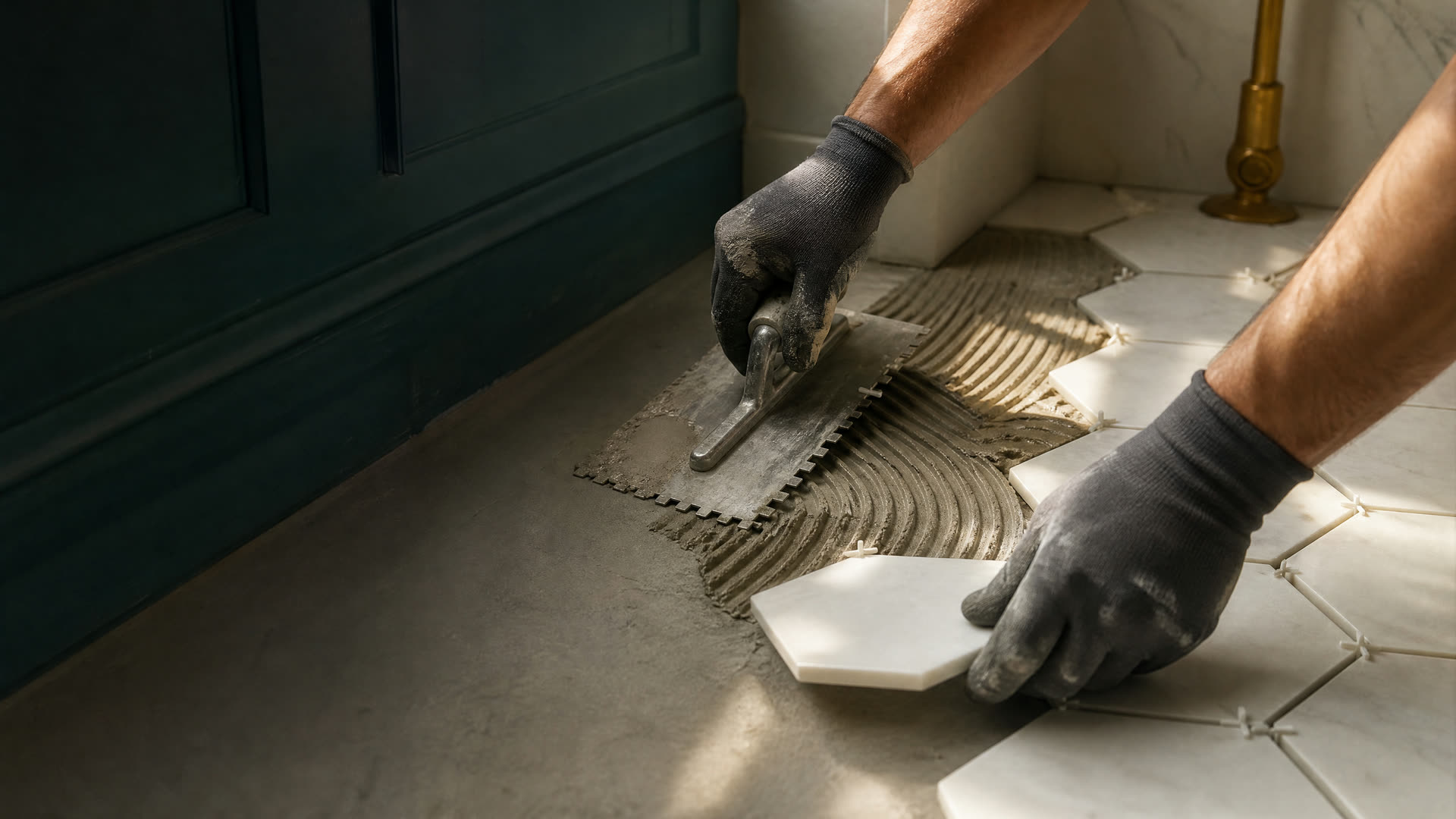
Gloved hands spread thinset and set hexagon floor tile

Abington · Tile And Waterproofing

Bathroom Tile Installation In Abington, MA

Retiling a shower, floor, or basement bath in Abington? Learn how damp ground floors, local water, and the layers under the tile affect the job, then reach an independent remodeler.

  • Common requests:

Abington, Massachusetts

Tile That Holds Up In Abington Bathrooms

Abington's flood risk is mostly a drainage story, not a coastal one. The town's 2024 Hazard Mitigation Plan rates overall flood impact as small, yet it lists repeated urban drainage flooding on Routes 18, 123, and 139, Centre Avenue, Hancock Street, Lincoln Street, and several other streets. If your home is on or near one of them and you're tiling a basement or ground-floor bathroom, the waterproofing under the tile matters as much as the tile itself.

Upstairs, the concerns shift to the shower. Grout and tile shed most water, but the membrane behind them does the real work, and in older Abington houses the walls and floors underneath may need leveling or replacing before any tile can be set.

Setting tile is not something South Shore Bathroom Remodeling Finder does. We help Abington homeowners reach independent remodelers and tile installers who work in town, so you can compare plans and choose.

Signs Your Abington Bathroom Tile Needs Replacing

Loose Or Hollow-Sounding Tiles

Tap the floor and shower walls. A hollow sound or a tile that moves usually means the adhesive has let go, often because water got behind it.

Grout That Crumbles Or Stays Dark

Grout that stays dark long after a shower, or falls out in pieces, suggests moisture is getting in and not drying out.

Musty Smell In A Basement Bath

A damp, musty odor in a ground-floor bathroom can mean water is wicking up from the slab or walls under the tile.

Cracks Running Across Several Tiles

A crack that crosses tiles points to movement in the floor below, which needs fixing before retiling.

Local knowledge

Abington Conditions That Affect Bathroom Tile

Ground water, sewer rules, and water chemistry all reach the tile job here.

Drainage Flooding

Repeat Street Flooding Is Logged On Several Abington Roads

The 2024 Hazard Mitigation Plan reports repeated urban drainage flooding on Routes 18, 123, and 139, Centre Avenue, Hancock, Lincoln, and Dorsey Streets, Central Street east of Route 58, and Wyman and Summit Roads. Basement baths in those areas call for tile set over a waterproof, damp-tolerant assembly.

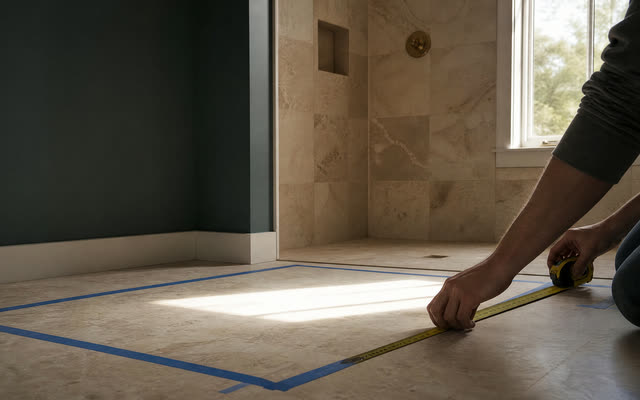
Source: Town of Abington Hazard Mitigation Plan 2024

Sump Pump Rule

Abington Bans Sump Pumps Draining Into The Sewer

The DPW Sewer Division prohibits sump pump discharge into the sewer and strictly enforces the rule. If a basement bathroom remodel includes dealing with groundwater, the sump has to discharge somewhere other than the sewer line.

Source: Town of Abington DPW

Water Chemistry

Abington Tap Water Is pH-Adjusted For Corrosion Control

The water supplier adds sodium hydroxide to adjust pH for corrosion control, and its 2025 report lists hardness of 53 to 79.3 ppm from a single September 2025 sample. Mineral film still builds on grout over time, so sealed or stain-resistant grout makes cleaning easier.

Source: Abington & Rockland Joint Water Works

Right now

Before Retiling An Abington Bathroom

A few checks help you and the installer agree on what's under the surface.

  1. Watch The Room After Heavy Rain

    For a basement or ground-floor bath, look for damp spots, efflorescence, or standing water after a storm and take photos to show the installer.

  2. Know Where Your Sump Discharges

    If you have a sump pump, trace where its line goes. It must not run into the sewer under Abington rules, and the Sewer Division will check on request.

  3. Stop Using A Leaking Shower

    If water appears on the ceiling below or tiles are coming loose, stop using the shower until it's inspected to avoid damaging the framing.

  4. Pick Tile Size With The Floor In Mind

    Large tiles need a very flat floor. In an older house, ask whether the floor will need leveling before you fall for a large-format tile.

What to expect

What An Abington Tile Job Usually Involves

A tile installer will remove the old tile, check the backer board or plaster underneath, and look for soft or rotted subfloor. In a shower, the walls should be rebuilt with cement board or foam board and a continuous waterproof membrane; on a basement slab, they may recommend an uncoupling or vapor-managing layer.

Massachusetts building code treats tiling as finish work that generally skips a building permit, but if the job grows to include plumbing, wiring, or framing changes, Abington's Building Department issues those permits through its online portal. A shower pan should be flood-tested before tile goes on.

After setting, grout needs time to cure before sealing and use. Ask the installer how long to wait and what cleaners to avoid on your tile and grout.

Hire smart

Hiring A Tile Installer In Abington

In Massachusetts, contractors who remodel an existing owner-occupied home of one to four units must be registered Home Improvement Contractors, and the plumbing and electrical parts of the job must be done by a plumber and an electrician who hold Massachusetts licenses, under permits.

  • Check The HIC Registration

    Tile work on an owner-occupied home usually falls under the state's Home Improvement Contractor rules. Look the installer up on the state registry.

  • Ask What Goes Under The Tile

    Have them name the backer, membrane, and any floor leveling they plan to use, and put it in the contract.

  • Ask About Basement Experience

    For a ground-floor or basement bath, ask how they've handled damp slabs and whether they've worked with dehumidifiers or drainage fixes.

  • See Finished Showers

    Ask for photos or addresses of tile work at least a few years old, so you can see how it has held up.

Costs

Tile Cost Factors In Abington Homes

Preparation drives much of the cost. Old tile over plaster, an uneven floor, or a damp basement slab all need work before new tile goes down, and in a shower the waterproofing layers add steps.

Tile size, pattern, and material matter too: small mosaics and complex patterns take longer than large plain tiles. Ask for itemized written estimates that separate demolition, prep, waterproofing, and setting, so you can see where the money goes.

Get a written estimate

Questions

Abington Tile And Waterproofing Questions

Still not sure? Send a short request and a local pro can answer the specifics.

Is my Abington basement bathroom too damp for tile?

Usually not, but it needs the right layers. Ask an installer to check the slab and walls and to recommend a waterproof or vapor-managing assembly under the tile.

Does retiling a bathroom in Abington need a permit?

Tile alone generally doesn't, but plumbing, electrical, or framing changes do. The Building Department issues those permits through its online portal.

What grout works with Abington's water?

Any grout gets some mineral film over time. Sealed cement grout or a stain-resistant grout makes cleaning easier, and a squeegee after showers helps.

Where can the sump go if I finish an Abington basement bath?

No. The DPW Sewer Division prohibits it and enforces the rule. If a basement bath remodel involves groundwater, plan another discharge route.

Get connected

Tell Us What’s Going On In Abington

Share a few details and an independent local bathroom remodeler who serves your town can follow up about the job. There’s no charge to use this site, and you decide whether to hire anyone.

Prefer to talk? Calling is the fastest way to reach a local bathroom remodeler.

Call Now

See our Privacy Policy. We don’t sell your information.

Call NowRequest