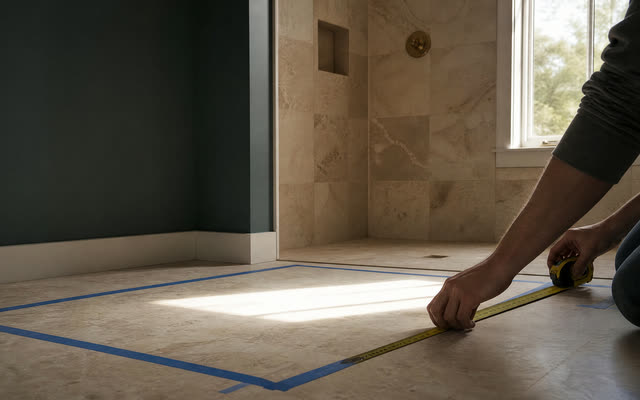
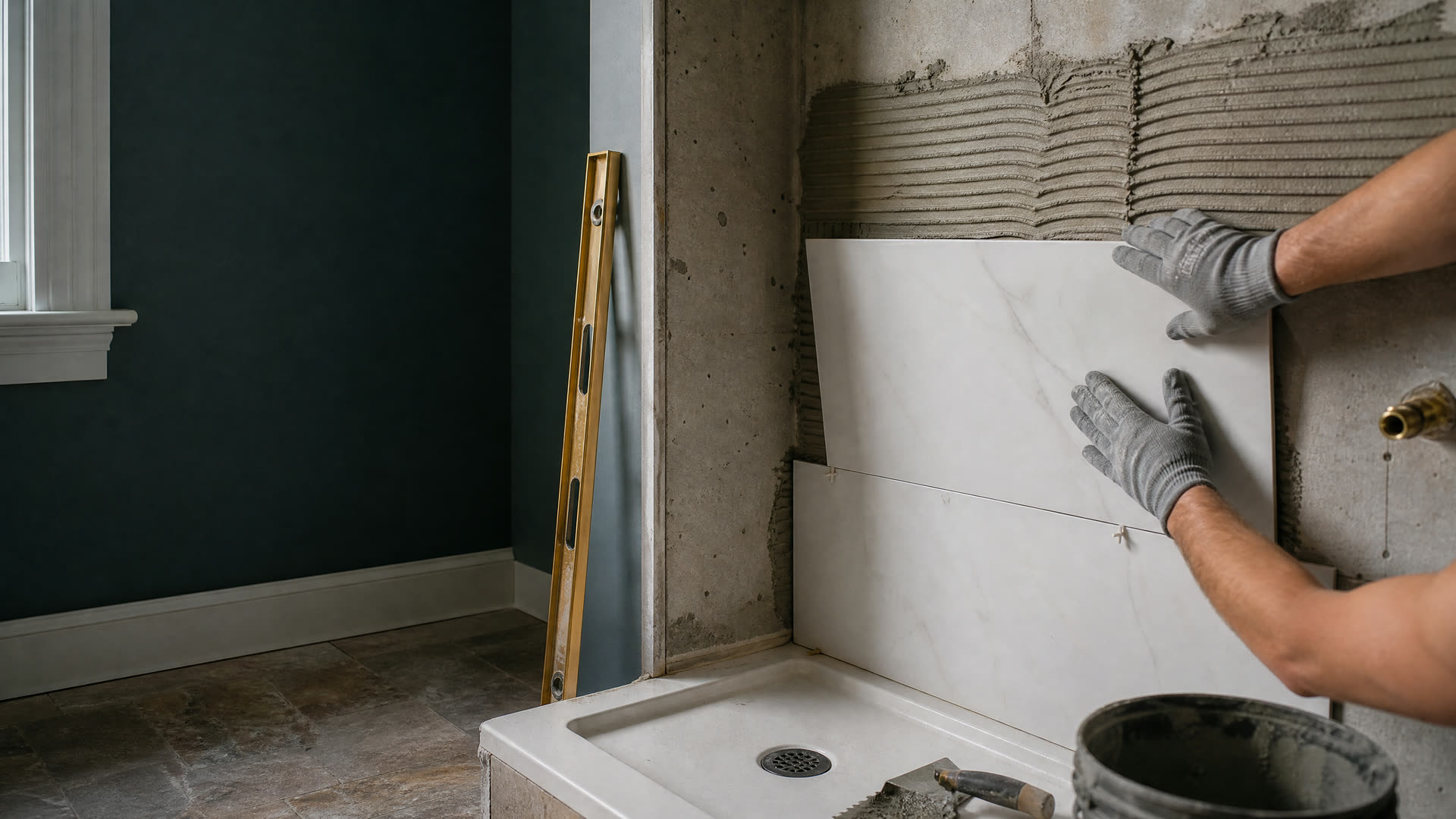
Gloved hands set large wall tile in a former tub alcove converted to a shower

Abington · Tub-To-Shower

Tub-To-Shower Conversion In Abington, MA

Swapping an old tub for a shower in an Abington home built before the war or just after it? See what demolition tends to uncover and how permits work, then reach an independent remodeler.

  • Common requests:

Abington, Massachusetts

Taking Out An Old Tub In An Abington House

Pulling a tub out of an Abington bathroom is the easy part. What the remodeler finds next depends heavily on the house's age, and about 21.3% of the town's homes were built in 1939 or earlier, per Census estimates for 2019 to 2023. In those houses a conversion can uncover plaster on wood lath, a cast iron drain and trap, and several layers of old paint.

None of that rules out a shower. It just means the estimate should account for it. A good conversion in an older house replaces the drain section that serves the new shower, adds a waterproof membrane behind the new walls, and sets a proper pressure-balancing valve rather than reusing a decades-old mixer.

We don't do conversions ourselves. South Shore Bathroom Remodeling Finder helps Abington homeowners reach independent remodelers who work in town, so you can compare estimates and decide on your own terms.

When A Tub-To-Shower Conversion Makes Sense In Abington

Nobody Has Taken A Bath In Years

If the tub only ever serves as a shower floor, a real shower gives you more standing room and an easier step in without changing the room's footprint.

The Enamel Is Worn Through

Chipped or rusted enamel on an older tub usually means refinishing or replacing it. Converting instead can cost less in the long run than putting money into a tub you won't use.

The Surround Has Been Caulked Too Many Times

Layers of caulk where the tub meets the wall often hide a gap that keeps letting water in. A new shower with a membrane ends the cycle.

Someone Struggles With The Tub Wall

A low threshold helps a household member with limited mobility, and grab bar blocking can go into the open walls during the conversion.

Local knowledge

Abington Facts That Matter For A Tub-To-Shower Swap

Housing age and the town's own advice on hiring shape most conversions here.

Prewar Housing

About One Abington Home In Five Predates 1940

Census estimates count 21.3% of Abington's 6,576 housing units as built in 1939 or earlier. Tubs in these homes often sit on old cast iron drains and against plaster walls, so a conversion usually includes some plumbing and wall repair before any tile goes up.

Source: U.S. Census Bureau ACS

Lead-Safe Work

Pre-1978 Paint Calls For Dust Control During Demolition

Massachusetts guidance warns that renovating homes built before 1978 can release lead dust from old paint. With a 1969 median build year, many Abington bathrooms fall in that window, so ask how the remodeler will contain and clean up demolition dust.

Source: Mass.gov

Check Before You Hire

Abington's Building Department Points Residents To State Records

The Building Department said in September 2024 that it can't recommend contractors and that residents should confirm a contractor's license and registration with the Commonwealth. For a conversion, that's the HIC registration plus the plumber's license.

Source: Town of Abington

Right now

Before You Call About An Abington Conversion

A few quick checks make the first site visit more useful.

  1. Check For A Second Bathroom

    Think about where everyone will shower during the work. In a single-bath house, ask the remodeler how long the room will be unusable and plan around it.

  2. Find The Water Shutoffs

    Locate the main shutoff and any fixture valves so you can show the remodeler. If the tub area ever leaked, mention it and point out any ceiling stains below.

  3. Decide Whether To Keep One Tub

    If this is the only tub in the house, think about whether you'll want one later for small children or resale. Some owners convert the upstairs tub and keep one elsewhere.

  4. Collect Photos Of The Space

    Pictures of the tub, valve, window, and floor help remodelers give rough guidance before a visit and keep bids based on the same starting point.

What to expect

What An Abington Tub-To-Shower Job Involves

Most conversions stay inside the old tub alcove. The remodeler removes the tub and surround, opens the walls to the studs, and checks the drain, framing, and subfloor. In older Abington homes, expect a conversation about replacing a cast iron trap or a section of old supply pipe while everything is open.

Plumbing changes need a plumbing permit, and new wiring for lighting or a fan needs an electrical permit; Abington's Building Department issues both through its online portal. The plumber's rough work is inspected before the walls close, and the shower pan should be water-tested before tile.

After tile and grout cure, the glass is measured and installed. Ask the remodeler which steps cause the longest waits so the schedule doesn't surprise you.

Hire smart

Hiring For A Tub-To-Shower Conversion In Abington

In Massachusetts, contractors who remodel an existing owner-occupied home of one to four units must be registered Home Improvement Contractors, and the plumbing and electrical parts of the job must be done by a plumber and an electrician who hold Massachusetts licenses, under permits.

  • Search The HIC Registry

    Conversions in owner-occupied homes of one to four units need a registered Home Improvement Contractor. Look the remodeler up on the state's HIC search.

  • Ask What Happens If The Drain Is Bad

    Get a written answer on how cast iron or galvanized pipe repairs would be priced if the remodeler finds them once the tub is out.

  • Confirm The Plumber's License

    Ask who will set the valve and connect the drain, and check that person's Massachusetts license on the state's online search.

  • Ask About Lead-Safe Practices

    In a house built before 1978, ask how the crew will contain dust, protect the hallway, and clean up at the end of each day.

Costs

What Drives The Cost Of An Abington Conversion

Keeping the drain where it is costs less than moving it. In prewar Abington homes, the condition of the drain, the plaster walls, and the subfloor can change the scope once the tub is out, so an allowance for those repairs belongs in every estimate.

Your choices drive the rest: a prefab base or a tiled floor, full glass or a curtain, a niche or a bench. Ask each remodeler for an itemized written estimate that lists permits and lead-safe work separately, and compare bids only on the same scope.

Get a written estimate

Questions

Abington Tub-To-Shower Questions

Still not sure? Send a short request and a local pro can answer the specifics.

What will I find behind my old tub in an Abington house?

In prewar homes, plaster on lath, cast iron drains, and old paint are common. In 1950s and 1960s houses, it's more often a steel or cast iron tub on a mortar bed, with signs of past leaks around the drain.

Do I need a permit to convert a tub to a shower in Abington?

If plumbing or wiring changes, yes. The Building Department issues those permits through its online portal, and the contractor should pull them and schedule inspections.

Will removing my only tub hurt resale in Abington?

Opinions differ, and it depends on who's likely to buy your house. If this is the home's only tub, talk it over with a local real estate agent before you decide.

Is lead paint a concern for an Abington bathroom conversion?

It can be in homes built before 1978. Ask the remodeler how they'll contain and clean up dust, and follow the state's lead-safe renovation guidance.

Get connected

Tell Us What’s Going On In Abington

Share a few details and an independent local bathroom remodeler who serves your town can follow up about the job. There’s no charge to use this site, and you decide whether to hire anyone.

Prefer to talk? Calling is the fastest way to reach a local bathroom remodeler.

Call Now

See our Privacy Policy. We don’t sell your information.

Call NowRequest