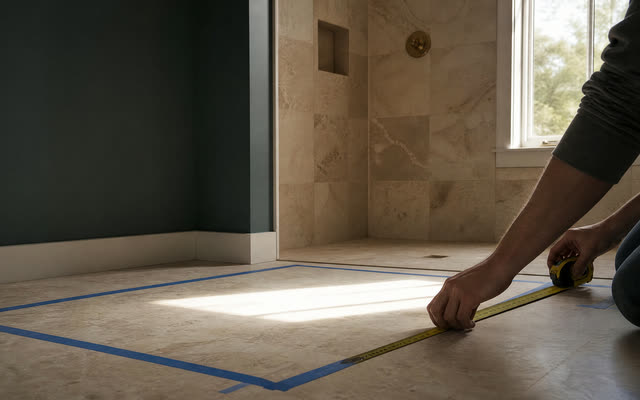
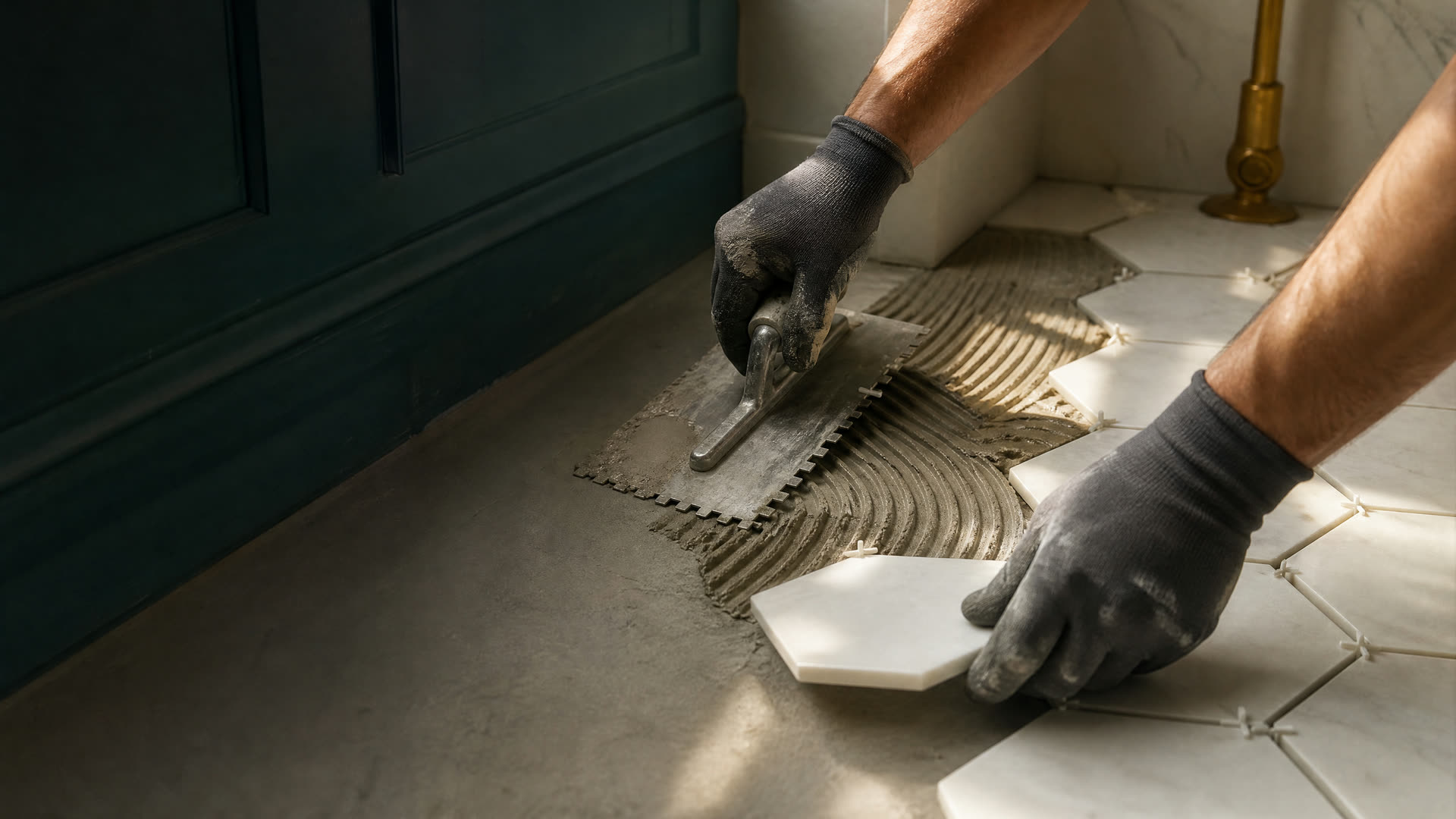
Gloved hands spread thinset and set hexagon floor tile

Weymouth · Tile And Waterproofing

Bathroom Tile Installation In Weymouth, MA

Plenty of Weymouth baths still have 1950s tile set in heavy mortar. Learn when removing it turns into a permitted job, then get connected with an independent remodeler serving Weymouth.

  • Common requests:

Weymouth, Massachusetts

Replacing Mid-Century Tile In Weymouth

Weymouth grew fast after the war. About one home in six went up in the 1950s alone, and almost two thirds were built before 1960, according to the town's 2026 Housing Production Plan. Tiled bathrooms from that period were typically built with wall tile and floors set in a thick mortar bed over metal lath, and plenty of them are still sound today.

When they aren't, taking them out is real demolition. A mortar wall weighs far more than drywall, comes off in chunks and exposes the studs, pipes and old insulation behind it. That makes the line between a finish job and a renovation an important one in Weymouth, both for permits and for who should do the work.

South Shore Bathroom Remodeling Finder connects Weymouth homeowners with independent local remodelers and tile setters. Nobody from the site does the work; you choose the pro and agree on the scope with them.

Is Your Weymouth Bathroom Tile Ready To Go?

Hairline Cracks Across Several Tiles

Fine cracks running through a row of mortar-set tiles can mean the wall has shifted or the lath behind it has rusted. One cracked tile is often fixable; a pattern isn't.

Tile Pushing Out Around A Tub Window

Windows over the tub were common in older baths and let water into the wall. Tile bowing outward near one is a typical sign of rot or rust behind it.

Open Joints Where Tile Meets The Tub

Gaps along the tub edge send shower water straight into the wall. That joint should be sealed with flexible caulk, not hard grout.

Stained Floor Grout By The Toilet

Discoloration that keeps coming back around the toilet base can mean a failed seal soaking the mortar bed, which is a plumbing repair first.

Local knowledge

Weymouth Records That Matter For Tile Work

Town housing, permit and flood records point to the questions a Weymouth tile job raises.

1950s Building Boom

16.3% Of Weymouth Homes Were Built From 1950 To 1959

Bathrooms from that decade often keep their original colored wall tile and small floor tile. If the tile is tight and the wall is dry, regrouting and fresh caulk may be enough; if the wall is wet behind it, plan for full removal.

Source: Town of Weymouth

Renovation Applications

Structural Work Goes Straight To The Building Inspector

Renovation, demolition and other structural applications have to be handed to the Building Inspector during inspector office hours; clerks accept only simpler permits such as roofing or siding. If tearing out mortar walls exposes framing that needs repair, build that step into the schedule.

Source: Town of Weymouth

Flooding Off The Maps

99% Of 2010 Flood Assistance Claims Were Outside Mapped Zones

The March 2010 rainstorms produced 615 disaster assistance claims in Weymouth, nearly all outside FEMA's Special Flood Hazard Areas. If your basement took water then, treat a basement bath as a wet room: porcelain, cement board and a membrane rather than wood underlayment.

Source: Town of Weymouth Hazard Mitigation Plan

Fore River Map Change

FEMA Revised The Fore River And Idlewell Flood Panel In 2016

A Letter of Map Revision lowered base flood elevations and took some properties out of the 100-year floodplain, effective September 29, 2016. Near the Fore River, check the current panel before deciding how water-tolerant a ground-floor bath needs to be.

Source: Town of Weymouth

Right now

First Steps For A Weymouth Tile Project

Decide what's worth keeping before anyone picks up a hammer.

  1. Decide Between Repair And Replacement

    Ask a remodeler to tap-test the walls and check them with a moisture meter. Sound vintage tile can sometimes stay while only the floor or tub area is redone.

  2. Think About Lead Before Demolition

    Paint on plaster above the tile and on the trim of a pre-1978 house may contain lead. State rules call for a lead-safe renovation contractor when paid work disturbs more than a small painted area per room.

  3. Plan For The Debris

    Mortar walls and floors fill a container quickly. Ask whether hauling is included and where the debris will sit during the job.

  4. Line Up The Plumbing

    If the valve, tub or drain will be replaced while the wall is open, a plumber with a Massachusetts license pulls that permit and books the Weymouth plumbing inspection during the inspector's early-morning call hours.

What to expect

What To Expect From A Weymouth Tile Job

Under the state building code, tile alone falls within the finish work that's exempt from a building permit (780 CMR 105.2). Tearing out a mortar-and-lath wall, hanging new board and repairing framing goes beyond that: mass.gov's HIC guidance chart treats demolition, plastering and wallboard as work that needs a building permit and a registered contractor. In Weymouth, those applications go to the Building Inspector at 75 Middle Street rather than the front counter.

Most remodelers will want to see the basement or ceiling under the bathroom, since water from a 1950s shower often shows up there first. Expect them to ask whether you want to keep the tub, because a cast iron tub set into a mortar wall usually means cutting the wall around it or breaking the tub to get it out.

After demolition comes the slow part: flattening the walls, setting backer board or a membrane, flood-testing any new shower pan and letting the setting mortar and grout cure before the shower is used.

Hire smart

Hiring Someone To Replace Tile In Weymouth

In Massachusetts, contractors who remodel an existing owner-occupied home of one to four units must be registered Home Improvement Contractors, and the plumbing and electrical parts of the job must be done by a plumber and an electrician who hold Massachusetts licenses, under permits.

  • Ask How They Remove Mortar Walls

    Ask about dust control, protecting floors and stairs, and their plan for a cast iron tub.

  • Check Registration For Demolition Work

    A floor tile setter may not need HIC registration, but the state chart lists demolition and wallboard as work that does. Look up the contractor in the state registry before you sign.

  • Ask To See Older Bathrooms They've Redone

    Rebuilding a 1950s bath is its own skill. Ask for photos of similar jobs and a past client you can call.

  • Put The Permit Plan In Writing

    The contract should say who applies to the Weymouth Building Inspector and who handles the plumbing and wiring permits.

Costs

Why Mortar-Set Tile Changes A Weymouth Estimate

Demolition and disposal of mortar-set tile take more labor than pulling down drywall, and old walls seldom come out flat enough to tile without shimming or new framing.

Decisions about the tub and plumbing move the number too. Keeping a cast iron tub avoids a replacement but adds careful work around it, while replacing it with the wall already open can make sense. Ask for a written estimate that separates demolition, carpentry, plumbing, waterproofing and tile so you can see what each part of the Weymouth job involves.

Get a written estimate

Questions

Weymouth Tile And Waterproofing Questions

Still not sure? Send a short request and a local pro can answer the specifics.

Should I keep the original 1950s tile in my Weymouth bathroom?

If it's firmly attached, the walls are dry and you like the look, regrouting and recaulking can extend its life. Cracks across several tiles, loose tiles or soft spots behind them point toward replacement.

Does tearing out old mortar walls in Weymouth need a permit?

Usually, yes, once wallboard, plaster or framing is involved. In Weymouth, renovation applications go directly to the Building Inspector during inspector office hours.

Is tile a sensible choice for a basement bathroom in Weymouth?

Yes, if every layer can handle getting wet. Skip wood underlayment and paper-faced board. That matters in a town where most 2010 flood claims came from outside mapped flood zones.

Can one cracked tile be replaced without redoing a Weymouth bathroom?

Often, if the crack came from a dropped object rather than movement. Matching a vintage color can be hard, so ask about salvaging a tile from a hidden spot, such as behind the toilet.

Get connected

Tell Us What’s Going On In Weymouth

Share a few details and an independent local bathroom remodeler who serves your town can follow up about the job. There’s no charge to use this site, and you decide whether to hire anyone.

Prefer to talk? Calling is the fastest way to reach a local bathroom remodeler.

Call Now

See our Privacy Policy. We don’t sell your information.

Call NowRequest