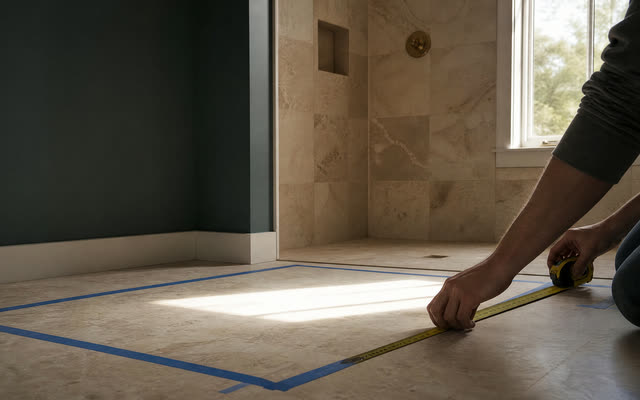
On the first visit, a remodeler should check the floor framing under the shower, find where the drain can run, and look at the valve wall. Expect questions about curb height, glass, and whether you want a bench or handheld sprayer, since each one changes blocking and plumbing.
Once work starts, the order matters. Demolition comes first, then framing repairs, then the plumber sets the drain and valve under a permit filed through PermitEyes. The rough plumbing is inspected on one of the inspector's set days. Only then does the base get its slope and waterproofing, followed by a flood test, tile, grout, and glass.
Ask for that flood test in writing: the base is plugged and filled with standing water for a period long enough to show it holds. It's the last good chance to find a leak before tile hides it.